

Introduction
In industries where product texture and flow characteristics directly affect quality, maintaining consistency is essential. Whether it is a batch of tomato ketchup, fruit puree, sauce, baby food, or cosmetic cream, manufacturers need reliable methods to ensure every product meets the same standards. One of the most trusted tools used for this purpose is the Bostwick consistometer.
This simple yet highly effective laboratory instrument has been used for decades to evaluate the consistency of semi-liquid products. Unlike complex viscosity testing equipment, it provides quick and practical results that can be easily understood by quality control teams and production managers. Its ease of use, affordability, and dependable performance have made it a standard instrument in many food processing and manufacturing facilities around the world.
Understanding the Instrument
A Bostwick consistometer is a laboratory device designed to measure the flow characteristics of semi-fluid and viscous materials. Rather than measuring viscosity directly, the instrument measures how far a product flows under the influence of gravity over a specified period.
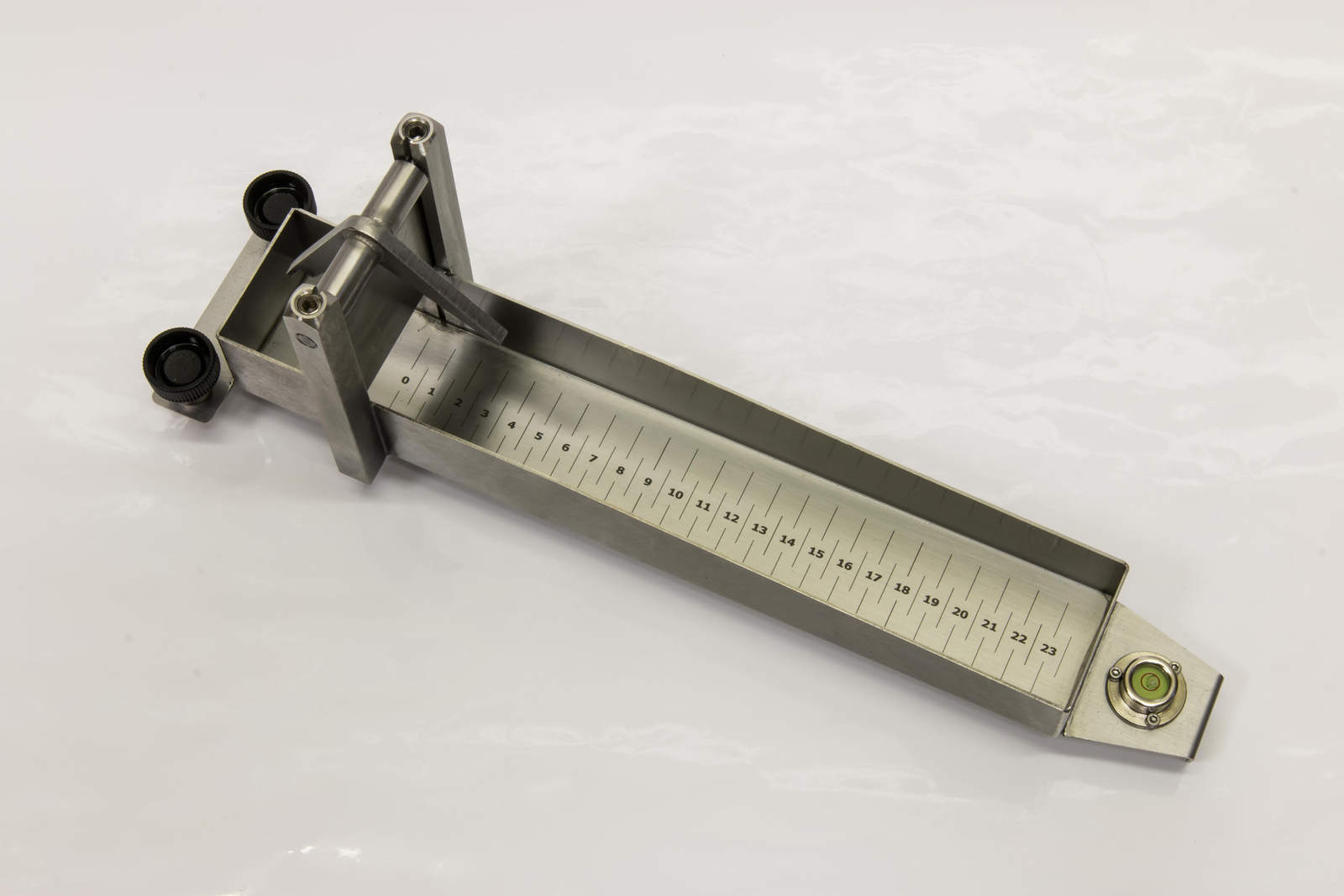
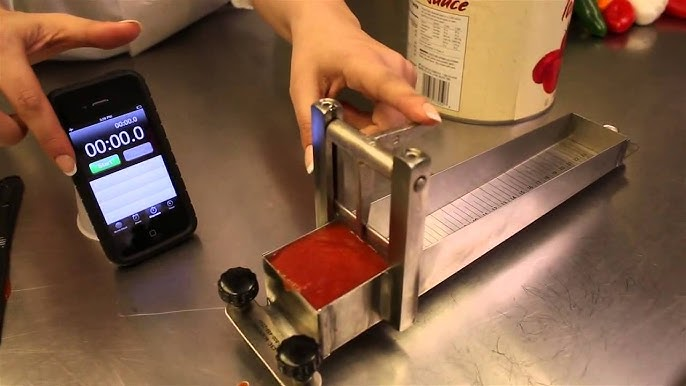
The device consists of a stainless-steel trough marked with measurement graduations and a sample reservoir separated by a sliding gate. When the gate is released, the sample moves freely along the channel. After a predetermined time, usually thirty seconds, the distance travelled by the sample is recorded. The measured distance provides an indication of the product’s consistency.
Products that flow farther are generally thinner, while products that travel shorter distances are thicker. This straightforward testing method makes the instrument highly practical for routine quality control operations.
History and Development
The concept behind the consistometer was developed to provide a rapid and repeatable way of evaluating product consistency in manufacturing environments. As food production expanded during the twentieth century, manufacturers needed reliable methods to maintain uniform quality across large production runs.
Traditional laboratory testing methods often required specialised equipment and lengthy procedures. The introduction of the Bostwick testing method offered a faster alternative that could be used directly within production facilities. Over time, the instrument gained widespread acceptance, particularly in the food industry, where consistency plays a major role in consumer satisfaction.
Today, the design remains largely unchanged because of its simplicity and effectiveness. Modern versions are typically manufactured using high-grade stainless steel and feature precision markings for improved accuracy.
Bio Table
| Title | Details |
|---|---|
| Article Title | Bostwick Consistometer: A Complete Guide to Measuring Product Consistency |
| Focus Keyword | bostwick consistometer |
| Category | Laboratory Equipment |
| Industry | Food Processing, Quality Control, Laboratory Testing |
| Reading Time | 8–10 Minutes |
| Article Type | Informative Guide |
| Word Count | 1,100+ Words |
| Target Audience | Food Manufacturers, Laboratory Technicians, Quality Control Professionals, Students, Researchers |
| Primary Purpose | To explain the working, applications, benefits, and importance of a Bostwick consistometer. |
How the Device Works
The operating principle is based on gravity flow. Before testing begins, the instrument is placed on a level surface. A prepared sample is then poured into the holding compartment located at one end of the measuring trough.
Once the sliding gate is released, the sample begins moving along the graduated channel under its own weight. A stopwatch is started simultaneously. After the designated testing period, the distance travelled by the sample is measured and recorded.
The resulting value provides a practical indication of consistency. A highly fluid sample may travel a considerable distance, while a thick or concentrated sample may move only a short distance. Because the procedure is straightforward, it can be repeated multiple times with minimal variation when testing conditions are carefully controlled.
Construction and Design
One reason for the popularity of this instrument is its durable and uncomplicated design. Most models are manufactured from food-grade stainless steel, making them resistant to corrosion and suitable for hygienic environments.
The measuring trough contains clearly marked graduations that allow technicians to determine flow distance accurately. The sample reservoir is designed to hold a specific quantity of material, ensuring consistency between tests. The sliding gate mechanism provides controlled release of the sample, helping to improve repeatability.
Many advanced models also include adjustable levelling feet and built-in spirit levels. These features ensure the instrument remains perfectly horizontal during testing, which is essential for obtaining accurate results.
Applications in the Food Industry
The food industry remains the largest user of this testing method. Product consistency influences not only appearance but also consumer perception and overall eating experience.
Manufacturers of tomato ketchup frequently use the instrument to ensure that every batch pours and spreads consistently. Sauce producers rely on consistency measurements to maintain the desired texture and mouthfeel of their products. Fruit puree manufacturers use it to verify processing standards and ingredient ratios.
Baby food producers also benefit from consistency testing because texture is an important factor in product safety and consumer acceptance. Dairy companies use similar procedures when evaluating yoghurt and other semi-liquid products.
In all of these applications, maintaining consistent product characteristics helps protect brand reputation and customer satisfaction.
Uses Beyond Food Processing
Although commonly associated with food manufacturing, the instrument is also used in several other industries. Cosmetic manufacturers employ consistency testing when producing creams, lotions, gels, and skincare products. Uniform texture is essential for both product performance and consumer appeal.
Pharmaceutical companies may use the device to evaluate gels, suspensions, and topical formulations. In these applications, consistency can influence dosage distribution and product stability.
Some industrial manufacturers also use the testing method when working with pastes, coatings, adhesives, and other semi-fluid materials. The versatility of the instrument allows it to serve a wide range of quality control purposes.
Benefits of Consistency Testing
One of the greatest advantages of this testing method is speed. Results can often be obtained in less than a minute, making it suitable for production environments where rapid decision-making is required.
Another major benefit is simplicity. Operators do not require extensive technical training to perform tests accurately. The procedure is easy to learn and straightforward to repeat.
Cost efficiency is another important factor. Compared with sophisticated rheometers and rotational viscometers, the instrument is relatively inexpensive to purchase and maintain. This makes it accessible to both small manufacturers and large production facilities.
The testing method also provides excellent repeatability when procedures are standardised. As a result, manufacturers can compare batches reliably and identify process variations before products reach consumers.
Factors That Influence Results
Accurate testing depends on maintaining consistent conditions throughout the measurement process. Temperature is one of the most important variables because many products become thinner as they warm and thicker as they cool.
Sample preparation also plays a significant role. Air bubbles, uneven mixing, or contamination can influence flow behaviour and affect measurement accuracy. The quantity of sample used should remain consistent between tests to ensure reliable comparisons.
Testing time must also be controlled carefully. Even small variations in timing can alter results, especially when working with highly fluid products. Maintaining a level testing surface is equally important because any tilt can influence the distance travelled by the sample.
Comparison with Other Methods
While the instrument provides valuable information about consistency, it is important to understand that it does not directly measure viscosity. More advanced instruments such as rotational viscometers and rheometers provide detailed information about fluid behaviour under different conditions.
However, these advanced systems are often more expensive, require specialised training, and may not be practical for routine production monitoring. The Bostwick method offers a balance between simplicity and usefulness, making it particularly valuable for day-to-day quality control operations.
Many manufacturers use consistency testing as a rapid screening tool while relying on more sophisticated laboratory equipment for research and product development activities.
Maintenance and Care
Proper maintenance helps ensure reliable performance over many years of operation. After each test, the instrument should be cleaned thoroughly to prevent residue buildup. Dried product deposits can interfere with measurements and affect accuracy.
The sliding gate mechanism should move smoothly without sticking. Regular inspection helps identify wear or damage before it affects testing performance. Stainless-steel surfaces should be kept clean and dry when not in use to preserve their appearance and durability.
Periodic verification of measurement markings and levelling components is also recommended. These simple maintenance practices help maintain consistent testing conditions and extend the life of the instrument.
Importance in Quality Control
Modern manufacturing relies heavily on quality control systems to ensure product uniformity. Consistency testing provides immediate feedback about production processes, allowing operators to make adjustments before significant quality issues develop.
For consumers, consistency is often associated with product quality. A sauce that suddenly becomes too thin or a yoghurt that becomes excessively thick may create a negative impression, even if the product remains safe to consume. By monitoring consistency throughout production, manufacturers can maintain the standards customers expect.
The ability to detect variations quickly also reduces waste, improves efficiency, and supports regulatory compliance. These benefits make consistency testing an important part of many quality assurance programmes.
Conclusion
The Bostwick consistometer remains one of the most practical and widely used tools for evaluating the consistency of semi-liquid products. Its straightforward design, ease of operation, and reliable results have made it an essential instrument in food processing, cosmetics, pharmaceuticals, and various industrial applications.
By measuring how far a product flows under gravity within a specific time period, the device provides valuable insight into product texture and uniformity. Although it does not replace advanced viscosity testing equipment, it offers a fast and cost-effective solution for routine quality control.
As manufacturers continue to focus on product consistency and customer satisfaction, the Bostwick consistometer will remain an important instrument for maintaining quality standards and ensuring reliable production outcomes across a wide range of industries.
