

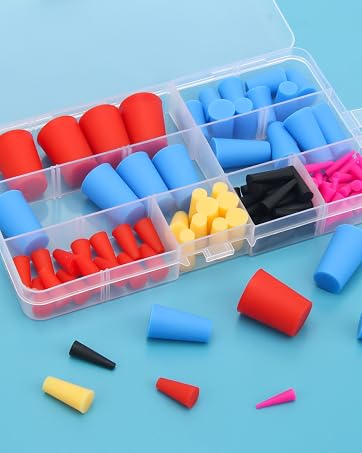
Laboratories rely on many small accessories that quietly play an essential role in maintaining safety, accuracy, and efficiency. Among these items, the rubber bung stopper is one of the most widely used yet often overlooked pieces of laboratory equipment. Whether it is sealing a flask during a chemical reaction, preserving biological samples, or preventing contamination inside a storage bottle, this simple component provides a dependable solution for countless scientific tasks.
Although it appears to be a basic piece of rubber, its design has been refined over many years to meet the demanding requirements of laboratories, educational institutions, pharmaceutical companies, and industrial facilities. Different materials, sizes, and designs make it suitable for a wide variety of applications where a secure seal is essential.
This guide explains everything you need to know about the rubber bung stopper, including its purpose, construction, benefits, common types, practical applications, maintenance, and factors to consider before choosing the right one.
Introduction
A rubber bung stopper is a tapered plug manufactured from natural or synthetic rubber that fits tightly into the opening of laboratory containers such as flasks, bottles, test tubes, and reaction vessels. Its primary purpose is to create a secure seal that protects the contents from contamination while preventing liquids, gases, or vapours from escaping.
Modern laboratories use these stoppers every day because they are inexpensive, reusable, and compatible with a wide range of scientific equipment. Their flexibility allows them to compress slightly during insertion and then expand to create an airtight or liquid-tight seal inside the container neck.
Despite advances in laboratory technology, rubber stoppers remain one of the most trusted sealing solutions due to their simplicity and reliability.
How It Works
The effectiveness of this stopper comes from its tapered shape. Instead of relying on threads or locking mechanisms, the slightly conical design allows the rubber to press firmly against the inner wall of a container.
As pressure is applied, the material compresses and forms a tight seal. Because rubber is naturally flexible, it adapts to minor variations in glassware dimensions while maintaining a secure fit.
This simple design helps laboratories protect sensitive chemicals, biological samples, and research materials without requiring complicated equipment.
Bio Table
| Attribute | Details |
|---|---|
| Article Title | Rubber Bung Stopper: Complete Guide to Uses, Benefits, Types & Applications |
| Focus Keyword | Rubber Bung Stopper |
| Category | Laboratory Equipment |
| Industry | Laboratory, Scientific Research, Education, Pharmaceutical |
| Product Type | Laboratory Sealing Accessory |
| Primary Material | Natural Rubber, Silicone, Neoprene, EPDM, Nitrile |
| Common Uses | Sealing flasks, bottles, test tubes, laboratory containers |
| Suitable For | Laboratories, Schools, Universities, Pharmaceutical Companies, Research Facilities |
| Article Length | 1,000+ Words |
| Reading Time | 7–9 Minutes |
| SEO Intent | Informational |
| Target Audience | Students, Laboratory Technicians, Researchers, Scientists, Educator |
Materials Used
The material selected depends on the intended laboratory application. Natural rubber is commonly used for general laboratory work because it offers excellent flexibility and affordability.
Synthetic alternatives provide specialised performance. Silicone rubber is preferred where high temperatures are involved because it remains flexible under extreme heat. Neoprene offers excellent resistance to oils and weathering, while EPDM performs well with water-based chemicals and outdoor environments. Nitrile rubber is widely chosen when contact with petroleum products or solvents is expected.
Each material has unique chemical compatibility, making it important to select the correct type for the intended experiment.
Common Types
Laboratories use several designs depending on their requirements.
Solid stoppers are completely sealed and are ideal when the container needs to remain airtight throughout storage or experimentation.
Single-hole versions contain a precisely moulded opening that allows laboratory tubing, thermometers, or probes to pass through while maintaining a reliable seal around the inserted equipment.
Double-hole models provide space for two separate tubes, making them suitable for distillation, gas collection, and complex experimental setups requiring both inlet and outlet connections.
Special-purpose silicone models are frequently selected for sterilisation procedures because they tolerate repeated autoclaving without significant deterioration.
Benefits
One reason these stoppers remain popular is their excellent sealing performance. By preventing leaks, they help preserve valuable samples and reduce material loss during storage or experimentation.
They also minimise contamination by blocking dust, airborne particles, bacteria, and moisture from entering laboratory containers. This protection is especially valuable in microbiology, pharmaceutical research, and chemical analysis where sample integrity is critical.
Their reusable nature makes them highly economical. With proper cleaning and inspection, a quality stopper can be used repeatedly before replacement becomes necessary, reducing laboratory operating costs.
Another important advantage is versatility. The same product can be used with beakers, flasks, bottles, test tubes, and specialised laboratory glassware simply by selecting the appropriate size.
Many laboratory-grade versions also demonstrate good resistance to moderate temperatures and numerous common laboratory chemicals, allowing them to perform reliably in demanding working environments.
Applications
The rubber bung stopper serves countless purposes across scientific and industrial settings.
Chemistry laboratories frequently use it during reactions that require sealed containers or controlled gas movement. Researchers often insert glass delivery tubes through perforated stoppers to direct gases safely into collection systems.
Biology laboratories depend on these stoppers to preserve biological specimens and culture media while reducing the risk of contamination.
Pharmaceutical manufacturers use high-quality rubber stoppers throughout research and production processes where sterile handling and sample protection are essential.
Food and beverage testing laboratories also rely on secure seals when analysing liquids, ingredients, and quality-control samples.
Educational institutions use them extensively because they provide students with a safe and inexpensive method of conducting experiments involving sealed containers.
Industrial laboratories, environmental testing facilities, and biotechnology research centres continue to depend on these simple yet reliable components for routine operations.
Choosing the Right Stopper
Selecting the correct stopper begins with accurate measurement of the container opening. Manufacturers produce standard sizes designed to fit specific neck diameters, ensuring the proper balance between easy insertion and secure sealing.
Material compatibility is equally important. Certain aggressive chemicals may attack natural rubber while remaining harmless to silicone or nitrile. Reviewing chemical compatibility charts before use helps avoid equipment failure and sample contamination.
Temperature should also be considered. High-temperature applications often require silicone products because conventional rubber may harden, soften, or crack after prolonged exposure to heat.
The intended laboratory procedure will determine whether a solid, single-hole, or double-hole design provides the most practical solution.
Maintenance and Care
Proper maintenance significantly extends the service life of laboratory stoppers.
After each use, they should be cleaned thoroughly using suitable laboratory detergents and rinsed to remove chemical residues. Allowing residue to remain on the surface may gradually weaken the material over time.
Before reuse, each stopper should be inspected carefully for cracks, hardening, swelling, or signs of chemical damage. Even small defects can reduce sealing performance.
Storage also influences longevity. Keeping rubber products away from direct sunlight, ozone sources, excessive heat, and harsh chemicals helps preserve their flexibility and sealing ability.
Laboratories that routinely handle hazardous chemicals often replace stoppers on a scheduled basis to maintain consistent safety standards.
Limitations
Although highly versatile, rubber stoppers are not suitable for every application.
Some highly concentrated acids, strong oxidising agents, or specialised organic solvents may gradually degrade certain rubber compounds. Selecting chemically resistant materials is essential when working with aggressive substances.
Standard rubber also has temperature limitations. Continuous exposure to very high heat can shorten its lifespan, making silicone a more appropriate choice in demanding thermal applications.
Finally, using the wrong size can compromise both safety and performance. An undersized stopper may leak, while an oversized one can damage delicate glassware during insertion.
Future Developments
Laboratory manufacturers continue to improve stopper technology through advanced materials and precision manufacturing techniques.
Modern silicone compounds provide greater durability, broader chemical compatibility, and improved resistance to repeated sterilisation. Some specialised laboratory stoppers are now manufactured under strict pharmaceutical standards to meet demanding research and medical requirements.
As laboratory equipment becomes increasingly sophisticated, sealing components are evolving alongside it to provide even greater reliability and consistency.
Conclusion
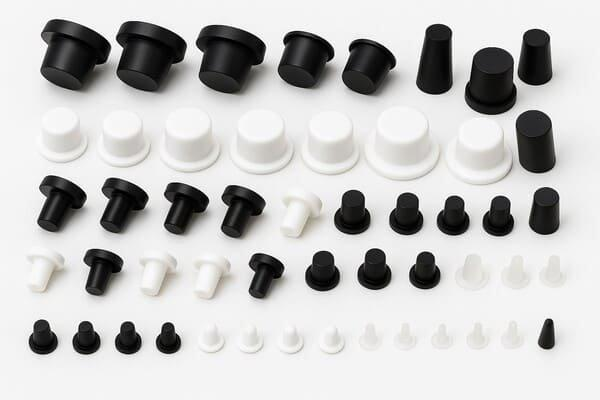
The rubber bung stopper remains one of the most practical and dependable accessories found in laboratories around the world. Its simple design delivers exceptional performance by creating a secure seal that protects samples, prevents contamination, and supports a wide range of scientific procedures.
Available in numerous materials, sizes, and configurations, it serves chemistry laboratories, biological research facilities, pharmaceutical manufacturers, educational institutions, food testing laboratories, and industrial environments alike. By selecting the appropriate material, ensuring proper sizing, and following regular maintenance practices, laboratories can maximise both safety and efficiency while extending the service life of this essential piece of equipment.
Though small in appearance, the rubber bung stopper continues to play a vital role in modern science, proving that even the simplest laboratory tools can have a significant impact on research quality, experimental accuracy, and workplace safety.
